

The financial landscape is often viewed as a tale of two cities: the regulated corridors of the National Stock Exchange (NSE) and the Bombay Stock Exchange (BSE). Both are governed by strict protocols and transparent digital footprints. On the other side, operating in the world of Dabba Trading. This is one of the box trading systems that had grassroots affairs, which later on, with the trend, turned into the image of the Dabba. It is no longer operating with a physical wooden box or a handwritten ledger, and that has taken a drastic shift to the AI-driven software ecosystem. These are the unofficial platforms that offer a trading experience that mirrors global giants. This allows the participants to speculate on everything from local equities to global markets without ever stepping into a regulated house.
The Architecture of Real Time Price Feeds
Data feed is the heartbeat and soul of any modern trading application. To maintain its credibility, for a private trading circle, the prices displayed on the user’s screen must be identical to the official exchange tickers down to the very last millisecond. With the Application Programming Interface (API) integrations, this can be easily achieved by any app. With this, the modern Dabba software can scrape any live data from official feeds. Even from the high-end financial data providers, official feeds can be taken. When the stock price moves on the NSE, it must be reflected instantaneously on the private app as well. These are ensured by utilizing low-latency data pipelines.
Low Latency Engineering for High Stakes Execution
Speed is the only currency that matters in the world of high-frequency trading. A trader can miss a crucial entry point, even if there is a delay of half a second. This delay is known as the latency. This is crucial as it can make you miss an entry point or an exit from a losing position. The developers in this modern world with the high technologies, use high-performance programming languages like C++ and Go. This offers the fastest possible routes to internet backbones. The command when you click on the ‘Buy’ button will be processed and recorded in the blink of an eye. This seamless experience is what rivals the mainstream brokerage apps.
The Role of Cloud Infrastructure in Market Stability
For the parallel market, it is really a game-changer in the transition from physical offices to the cloud. The operators of the guaranteeing nearly 100% uptime as they are hosting trade engines on encrypted cloud servers. The cloud server allocates more resources to prevent the app from crashing, even if there is a volatile and thousands of users who log in at once. This resilience ensures every trader that the market never closes due to technical failure.
Artificial Intelligence and Automated Risk Management
For the modern Dabba ecosystem, AI has become a silent guardian. Online trading platforms offer significantly higher leverage than any regulated brokers. So, the risk of losing more than their deposited margin is also higher for a trader. And, it is for this issue that the platforms have integrated AI algorithms in the backend to monitor every exposure in real time. The AI, the silent guardian, will trigger an auto-cut mechanism if the position moves against it and gets threatened. The internal ledger remains balanced without the need for manual intervention with this automated liquidation protection.
Digital Security and Data Privacy Protocols
For many participants in Dabba Online Trading in India, privacy was a primary factor. So, the developers of these apps employed End-to-End Encryption and Security Socket Layer certificates for these apps. This ensures that the communication between the trader’s phone and the central server cannot be intercepted. The identity of the individual traders and historical trades remains obscure with the advanced data masking techniques and through complex alphanumeric coding.
Multi-Tier Dashboarding for Hierarchical Management
The trading software is the place that reflects the social hierarchy consisting of Super masters, masters, and sub-brokers. The total risk across an entire network of thousands of users is viewed by the super master. The sub-brokers only see the activities of their specific clients. This allows for decentralized management. The technological brain remains centralized, and the settlements and margin calls can be handled locally.
Mobile First Design and User Experience
Reliability is what every modern trader looks for and demands a pocket-sized solution. Mobile-first philosophy is what is designed in the UI/UX of these online trading apps. The ultimate goal is to make the app indistinguishable from other regulated platforms available online. For security, the app features biometric fingerprint, real-time push notifications, and price alerts. All these technologies remove all friction from the trading process and make it easy, just as using any application on the participant’s mobile.
Synchronizing with Global Commodity Markets
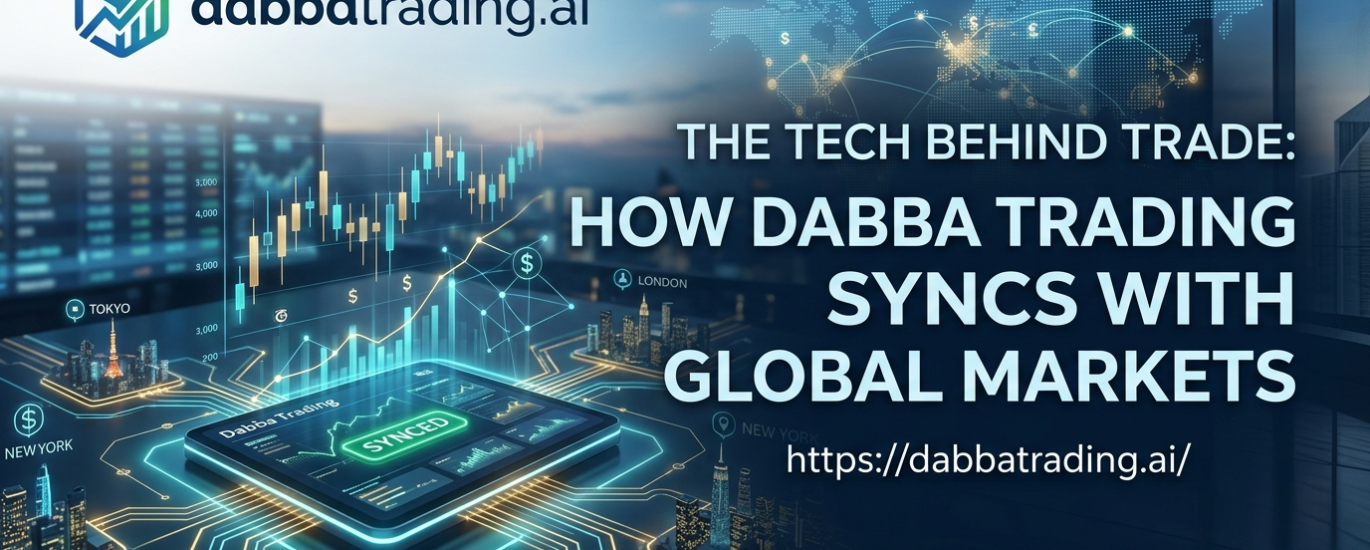
The trade in the trading app platforms isn’t just limited to Indian stocks, but a significant portion of the volume comes from international commodities. That includes crude oil, Brent, and Comex gold. The apps are developed in such a way that the software is programmed automatically to switch between time zones. This enables synchronization with the opening of the London or New York markets as well.
Bottom Line
The modern trading tradition is taking a drastic shift with the advancement of Dabba Trading technology. It is fascinating to lead the way in digital adoption. It is crucial to get an all-in-one app with integrated AI, low-latency data streams, and most importantly, cloud security. The Dabba system stands as a shadow system with the high-speed data of the global financial world.